

When It's Right to Be Wrong
Children and Chipmunks

My husband and I love observing nature and spending time with our four and six-year-old grandsons. Our favorite place to enjoy both is at our little lake house in the woods. That’s where we fish, hike, kayak, swim, and watch the sun rise and set - among other natural wonders.
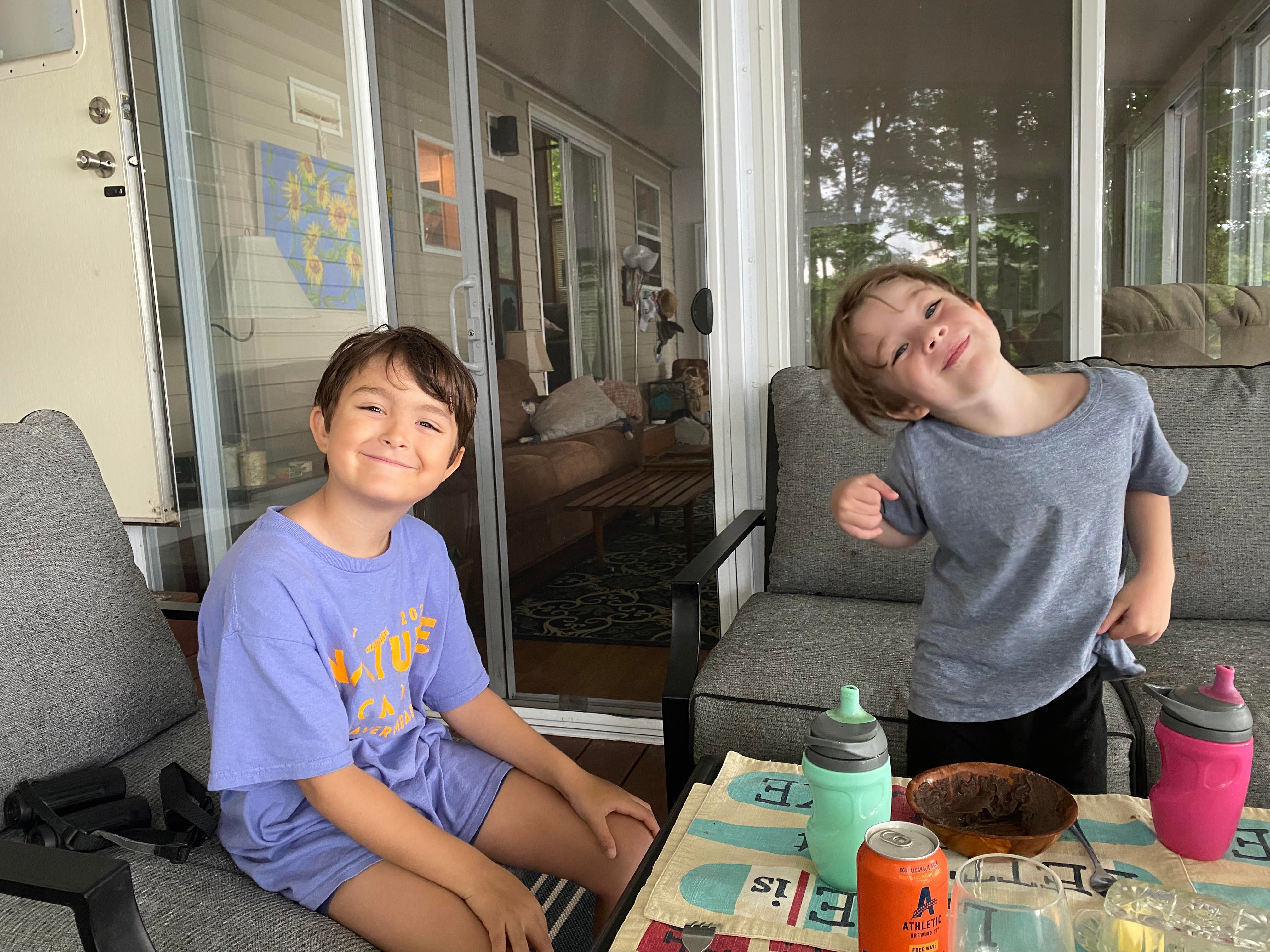
When we open up our little house in the spring, I pot flowers. We go there mainly on weekends, so we choose low maintenance plants. Our hope is that the sun shines on our weekend outdoor activities and that it rains at least once during the week to water the plants.
Last year, we planted Asiatic lilies which I’ve observed grow well and bloom long in our city garden. Once we planted and watered the plants with the children eagerly assisting, we went inside to prepare a meal.
The older grandson wandered out to play. When I peeked out to check on him, I saw one of the lilies was uprooted. With the stem lying horizontally its leaves detached and our grandson playing nearby, I began to wonder.
Had the same child that took the effort to unwind the hose and drag it out front to water the plants, decided to uproot one of them? Lacking another theory, I glommed onto that one and headed out to speak to our grandson. When I asked him why he pulled up the plant, he denied doing it and I went back inside.
Another fun fact, when our grandson pulled out the hose, he encountered a spider. His fear of the eight-legged creatures has led him to learn about them. When he saw one, he hollered, “Omi, there’s an arachnid on the hose!”. Then he yanked the hose off its holder and the daddy long legs hobbled away.
Spiders are in the class of arachnids commonly seen at the lake. We often pause to watch them spin their webs or marvel at daddy long legs walking on water. I understand the “creep” factor having to do with spiders because I was afraid of them as a child.
Back to the plants, the next time I looked out, another one was down. I know the little guy can be a great helper, but is also capable of mischief, so I approached him again. He insisted he had not touched the plants and I went about my business cleaning up inside while the children played.
Amidst my work, I stopped to glance out again and saw a third plant had been uprooted. Now I was incredulous! I know curiosity is a strong pull, one that leads to learning, and that learning at our grandson's age is hands on. Still, this behavior did not fit with who I know him to be.
A short time passed before I found evidence that debunked the theory involving my grandson. There it was, a chipmunk sitting in the pot nibbling leaves off the stalk! By now, all four plants were uprooted, bulbs and stems chewed on, and leaves strewn about.
It was time to not only clean up the mess in the pots, but also the false accusation I had made. Our grandson was happy to hear that I had found the mischief-maker and clearly, it was not him!
This incident piqued our interest in chipmunks. We read the story of a friendly chipmunk called “Chippy” in our Beatix Potter collection which led to greeting every chipmunk that way. We forgave Chippy for digging up our plants and stayed on the look-out for visitors by that name.

The children grew more intrigued by the little woodland creatures and eager to learn about them. We know some of their habits since we have watched them scamper onto the porch to eat crumbs under our dining table. Whenever we approach, they scurry away. The children would like to get a closer view of a chipmunk, so we talked about what they like to eat and how they find food.
We discovered they eat nuts as well as bulbs - just like squirrels. It’s too early for acorns, so we decided to bring them some peanuts in the shell. While the chipmunks open the nuts, it will be our chance to observe them - if we are quiet and still.
While discussing our plan, I wondered aloud what plants chipmunks might like to eat. Our older grandson said confidently, “They like lilies”. Yes, he was right about that and was happy to share information gained through direct observation.
On the other hand, I was just as happy to be proven wrong about who dug up my lilies. I reflected on my thought process to discover when I drifted away from facts based on evidence and started making assumptions.
In reality, when I saw them uprooted, I did not know who had dug up the lilies. All I knew was that I did not like what happened and wanted to stop it. And that my grandson was playing out front.
Examining my thoughts reveals when I jumped to conclusions without supporting evidence. I realized that it happens when an event causes discomfort like the uprooted plants but also when I cannot find something. I start making up stories about what happpened - often fantastic and unlikely schemes.
Making up stories keeps my mind occupied in an effort to control the situation and put an end to the discomfort - but rushing to conclusions is not good science. Observing my thoughts when I cannot find something, has become a game for me. I laugh at myself noticing the wild theories I can come up with.
"He who laughs at himself never runs out of things to laugh at," is attributed to the Stoic philosopher Epictetus. I’ve found it to be true, so I don’t take all my thoughts seriously.
Humor and lightness helps me unravel my thoughts and ground them in facts. When I consider that I don’t know something or that my theory could be wrong, instead of jumping to conclusions, I remain open to discovering information that leads to problem-solving.
Earlier this season, I was again anticpating lilies in my garden. Last year, the patch of day lilies was beautiful. One week, the buds looked about to burst, so I looked forward to seeing them in full bloom the next week. Instead, they were not uprooted, but had been severed at the top of the stem.
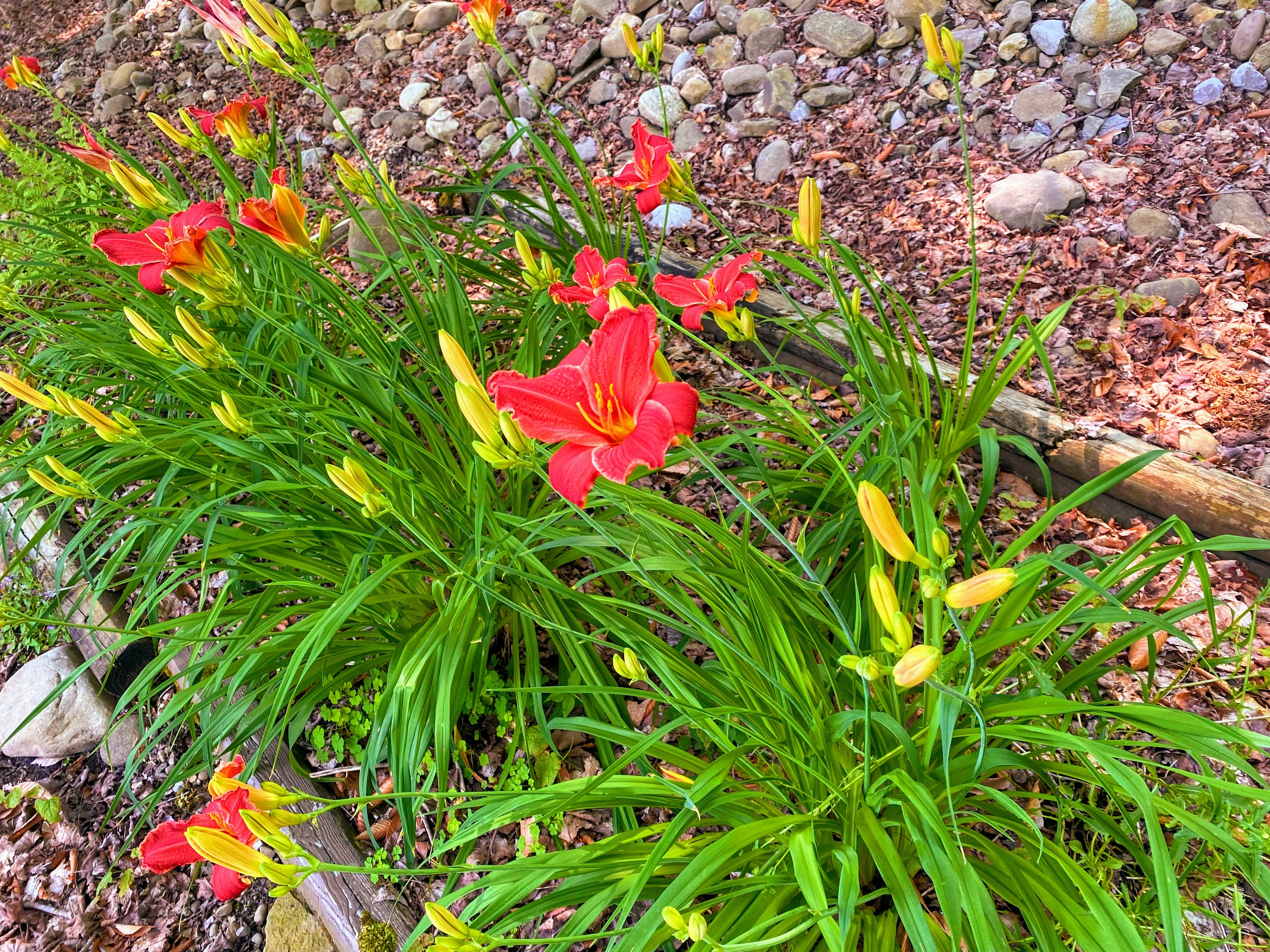
This time, I know something about the animals that like lilies and it never crossed my mind to consider humans were involved. But I did learn that although the chipmunks and squirrels dig up plants to eat the bulbs; plants, deer rabbits, and other animals graze on the foliage including the flowers.
Knowing that does not change my love for deer and rabbits, yet in preparation for next year, I will research ways to protect the plants from hungry critters. That’s the beauty of life at the lake, we are always learning not only about nature but also our human nature.
I am aware that it’s better to investigate before assuming - not to quickly jump to conclusions. But if I do make assumptions regarding people I care about, it’s best to assume good intentions.
If I had a do-over, I would say to my grandson, “I know you are a great helper, can you help me figure out who dug up the lilies?”. In this way, I would illicit his cooperation in solving the problem.
Adult opinions have a way of becoming a child’s self-fulfilling prophecy. They live into who we suggest they are.
If I jump to false conclusions which I sometimes do, I have learned it is alright to be wrong and good to admit it.
It’s a reminder to practice these things:
keep an open mind
laugh at myself
assume good intentions
admit mistakes